블로그 이미지
Morning lark

카테고리

분류 전체보기 (2262)
Fuel Cell (898)
New Energy (1211)
Energy Storage (6)
New Biz Item (2)
Total
Today
Yesterday

Ohmium has reached an 18 GW per ton iridium utilization rate in its proton exchange membrane (PEM) electrolyzer, surpassing the industry’s 2030 target of 10 GW per ton.


The company said it has made significant technological advancements that have resulted in reducing iridium usage by 50% in its Lotus electrolyzer, Mark 2. This supports the cost-competitiveness of green hydrogen production by lowering the overall cost of PEM electrolyzers.


Dr Chock Karuppiah, Chief Science and Technology Officer, said: “We’ve made significant strides in reducing iridium usage in our PEM electrolyzers, exceeding the 2030 industry target of 10 GW per ton. We’ve achieved a utilization rate of 18 GW per ton. This innovation is crucial, as iridium is one of the most expensive materials in electrolyzer manufacturing.”


Chief Executive Officer Dr Markus Tacke added: “We’re proud of the team’s hard work and achievements. By reducing iridium usage and leveraging our high system efficiency (48 kWh/kg), Ohmium is lowering the cost of green hydrogen production and enhancing the overall cost-efficiency of our green hydrogen solutions.”


The company aims to double utilization efficiency to 36 GW per ton or less within another year, a step it said will move it closer to its goal of near-zero iridium usage within a decade.


Source:   Hydrogentechworld

Posted by Morning lark
, |

China first coal to chemicals project with green hydrogen starts commercial operations


BEIJING, Nov 20 (Reuters) – China’s first coal-to-chemicals project integrating green hydrogen started commercial operations on Thursday, according to a report from state-run CCTV.


Operated by major state-owned power producer Datang Group, the project is forecast to produce 70.59 billion cubic metres of hydrogen annually, station manager Cao Guoan told CCTV.


He did not say how much the plant is currently producing or whether it would also generate other chemical derivatives. Coal chemicals plants typically convert coal into syngas – a mix of carbon monoxide and hydrogen – which can be further transformed into products including ammonia, methanol and olefins.


The plant, in Inner Mongolia’s Duolun, includes a 150-megawatt wind and solar plant that also sends its surplus electricity to the grid, according to the report.


The plant was designated by the energy regulator as a national hydrogen demonstration project and

CCTV said,

Provides a replicable model for the green transformation of the coal chemicals industry,

China is one of the few countries transforming coal into chemicals, oil and gas at large scale, a growing industry that is helping to reduce China’s reliance on imports that could be cut off in a conflict.


But growth in the emission-intensive sector is a key reason China is behind its 2025 carbon intensity target, spurring efforts to curb emissions.


Reporting by Colleen Howe; Editing by Sonia Cheema


Source:   Hydrogencentral

Posted by Morning lark
, |

Stablegrid Group has selected ITM Power to supply 710 MW of proton exchange membrane (PEM) electrolyzer capacity for two German grid-balancing hydrogen projects designed to support system stability.


The projects will use hydrogen production and underground cavern storage to provide grid-friendly loads that stabilize the power system by absorbing mismatches between electricity supply and hydrogen consumption. This operating mode, referred to as ‘predispatch’, is intended to address discrepancies that arise before grid congestion occurs.


The approach is based on the ‘Netzbrücke’, or ‘grid bridge’, which aims to reduce reliance on redispatch measures used to prevent bottlenecks. Redispatch involves lowering generation ahead of congestion points and raising it behind them. According to the release, negative redispatch results in annual costs of €2–3 billion in Germany. Predispatch, described as a form of complementary hybrid redispatch, is intended to reduce these costs while enabling productive use of surplus renewable energy.


For the Rüstringen-based Netzbrücke 410 project, ITM Power will supply a 30 MW green hydrogen production plant using its NEPTUNE V containerized electrolyzer units, along with associated integration works. Stablegrid has reserved ITM’s production capacity ahead of an expected final investment decision (FID) in 2026.


A second project will deploy 680 MW of indoor electrolyzer capacity. Stablegrid and ITM Power plan to begin pre-front-end engineering design work in January 2026, with the FID anticipated in 2028.


Oliver Feller, Member of the Management Board of Stablegrid Group, said: “With ITM Power, we have a strong and experienced partner at our side who brings the technical expertise and excellence required to implement system-stabilising hydrogen projects of this magnitude reliably.”


Source:   Hydrogentechworld

Posted by Morning lark
, |

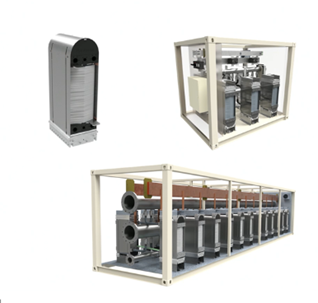
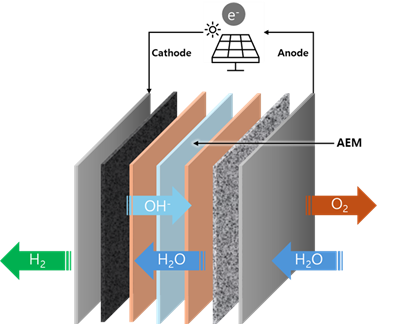
GS Engineering & Construction (GS E&C) is laying the groundwork to enter the hydrogen production technology sector. The company reported that it signed an agreement this month with U.S.-based electrolyzer technology firm EVOLOH to develop an anion-exchange-membrane (AEM) water electrolysis plant package. The joint development program will begin at the end of November 2025.

The agreement follows an MOU signed in April 2025 covering potential collaboration in basic design packages (BDP), front-end engineering design (FEED), and engineering, procurement and construction (EPC).

EVOLOH has developed electrolyzer stack technology that produces hydrogen through water electrolysis using an AEM. Unlike proton-exchange-membrane (PEM) systems, AEM technology does not require rare-earth materials and precious metals. In this context, AEM technology is a highly promising next-generation technology for electrolyzer-based hydrogen production. EVOLOH’s patented rapid manufacturing technology leads to 4x lower factory cost and 5x lower stack materials cost compared to current technologies. Most importantly, EVOLOH’s stacks are designed to operate off grid to avoid grid connections costs and expensive electricity rates, thus drastically minimizing operating expense. EVOLOH has completed pilot testing of its megawatt-scale Nautilus® electrolyzer stack and has begun commercial production.

GS E&C plans to develop hundreds-of-megawatts-scale hydrogen production plant packages designed to integrate EVOLOH’s AEM stack technology. The hydrogen production package with EVOLOH’s AEM stack will be a key enabler that significantly reduces the levelized cost of hydrogen (LCOH).

A GS E&C representative said “By combining our EPC expertise with EVOLOH’s core technology, we see this partnership as a pivotal step in expanding our portfolio from traditional petrochemical projects to next-generation clean-energy infrastructure. We aim to lead the green business sector by building a value chain across the hydrogen market.”

In related hydrogen-sector activities, GS E&C signed an agreement in September with Korea Gas Corporation and Sumitomo Corporation Korea for collaboration on technology development for a liquid-hydrogen import terminal. Under the agreement, the partners will establish the technical basis for demonstration and infrastructure development, with GS E&C responsible for technical evaluations for developing liquid-hydrogen storage infrastructure.


GS E&C initiates development of hydrogen electrolysis plant package with EVOLOH | H2TECH


GS E&C initiates development of hydrogen electrolysis plant package with EVOLOH | H2TECH


h2-tech.com


Posted by Morning lark
, |

허베이성에 1,082km 세계 최대 수소 송관 착공
대규모 수소 이송으로 중국 ‘쌍탄소’ 전략 구체화
한국은 2030년 이후 지역 송관망 구축 예정

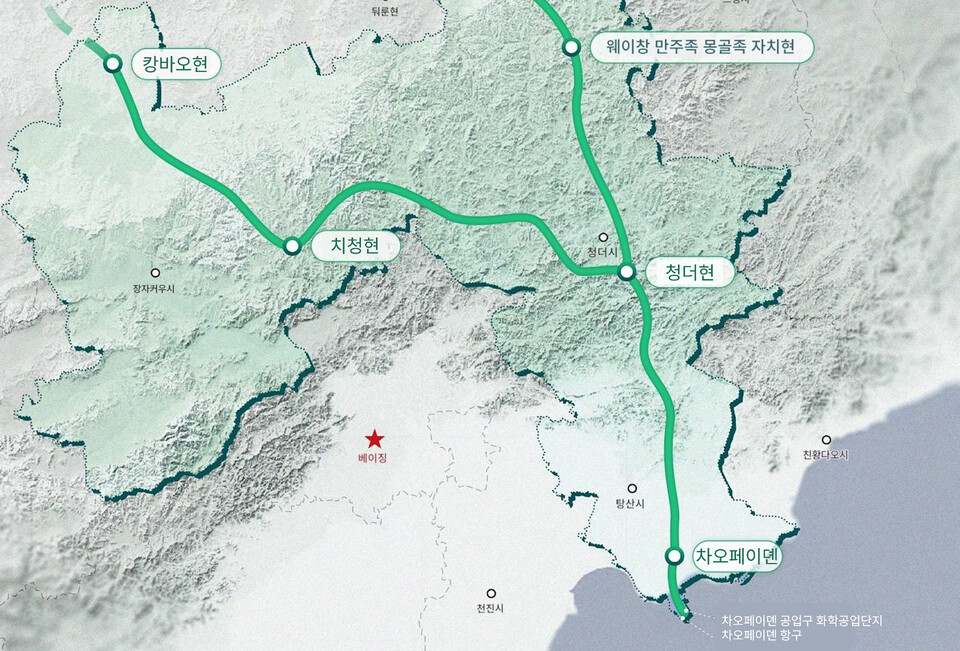
중국이 수소 이송 분야 ‘현대판 만리장성’ 구축에 들어갔다. 허베이성이 2023년부터 구상한 ‘캉바오-차오페이뎬 장거리 수소 파이프라인’이 지난 10월 28일 첫 삽을 떴다. 허베이성 서북단 캉바오현에서 동쪽 보하이만의 차오페이뎬까지 이어지는 총길이 1,082km, 이송 구간 1,037km의 세계 최장 수소 송관을 구축하는 사업이다.

베이징을 둘러싼 허베이성은 중국 최대 철강 생산지다. 이번 프로젝트는 허베이성의 대규모 그린수소 생산단지와 제철 산업단지를 송관망으로 연결해 수소 공급망을 확충하려는 전략이다. 시공은 탕산 하이타이 뉴에너지(Tangshan Haitai New Energy)의 자회사인 장자커우 하이타이 수소에너지가 맡았다.

캉바오현을 비롯한 장자커우시 일대는 풍력·태양광 등 재생에너지가 풍부한 그린수소 생산 거점이다. 이곳에서 생산한 수소를 수강징탕 제철소 등 철강 산업이 모여 있는 탕산시 차오페이뎬으로 이송하게 되며, 2026년 말 완공을 목표로 한다.


고강도 강관에 자동용접 기술 적용

이번 사업은 세계 최대 규모로 813mm 직경의 대구경 파이프라인을 사용해 연간 155만 톤의 수소를 이송하게 된다. 캉바오 1번 스테이션을 기점으로 20개 구와 현을 지나 차오페이뎬으로 연결된다.

장거리·고압 수송에는 수소 취성, 누설 등 위험 요소가 발생할 수 있다. 하이타이 뉴에너지는 안전을 확보하기 위해 첨단 기술을 도입했다. 먼저 X60 등급의 고강도 강관을 적용하고, 모든 링 용접부에 100% 방사선·초음파 검사와 자동용접을 진행하는 등 천연가스관 이상 수준의 고사양을 채택했다.

그 결과 설계 압력을 72bar 수준까지 확보했고, 수소 취성에 대응할 수 있는 금속 소재를 적용한 것으로 평가된다.

중국은 2030년 천연가스 소비량이 5,500~6,000억m³에 이를 것으로 전망한다. 이 중 5%를 수소 혼입으로 대체할 경우 연간 2만3천~2만6천 톤의 수소가 필요하다. 중국 정부는 2030 탄소 피크, 2060 탄소중립을 합친 ‘쌍탄소’ 전략 아래 수소산업을 ‘신질 생산력’(AI, 반도체, 우주항공 등 미래 첨단산업)으로 명시해 육성하고 있다.

현재 중국의 수소 송관은 산업단지 간 소규모·단거리(총 100km 내외)에 머물러 있어 기술·표준은 모두 초기 단계다. 이번 사업은 미국 ASME B31.12 등 해외 표준을 준용해 먼저 시공을 진행하고 이후 자국 표준을 정비하는 방식으로 추진하고 있다.

수소 송관이 안정적으로 운용되면 20개 제철소 규모의 녹색 철강 전환을 지원할 수 있고, 차오페이뎬 항만을 기반으로 그린암모니아, 그린메탄올 수출 등 녹색에너지 산업을 확장하는 동력을 얻게 될 전망이다.

캉바오-차오페이뎬 수소 파이프라인은 중국 정부의 수소 네트워크 전략 아래 ‘허베이 모델’로 지정된 국가시범사업으로, 장거리 이송 인프라의 표준 사례가 될 것으로 기대된다.

한편 국내 사정은 이와 다르다. 단거리는 기체수소 배관, 장거리는 고압 튜브트레일러나 액화수소 탱크로리 등 도로 운송을 병행하고 있다. 이는 국토가 상대적으로 작고, 수소의 생산과 소비가 주로 산업단지 안에서 이뤄져 장거리 송관망의 필요성이 크지 않기 때문이다.

현재 울산, 여수, 대산 등 주요 산업단지를 중심으로 약 200km 정도의 파이프라인이 구축되어 있으며, 정부는 2030년 이후 수도권이나 충청·부산·대구권 등 지역망을 연계해 전국에 파이프라인을 구축할 계획이다.

중국에 건설되는 세계 최장 1,082km 수소 파이프라인 < 시장 < NEWS < 기사본문 - 월간수소경제


중국에 건설되는 세계 최장 1,082km 수소 파이프라인

중국이 수소 이송 분야 ‘현대판 만리장성’ 구축에 들어갔다. 허베이성이 2023년부터 구상한 ‘캉바오-차오페이뎬 장거리 수소 파이프라인’이 지난 10월 28일 첫 삽을 떴다. 허베이성 서북단 캉

www.h2news.kr


Posted by Morning lark
, |